Traveling With a Blind or Deaf Dog: 2026 Complete Guide
Vet-backed tips for traveling with blind or deaf dogs — car rides, hotel stays, trail outings — and gear reviews for a halo harness, vibration collar, and GPS tracker.

This post may contain affiliate links. Disclosure
Traveling with a dog that can’t see or hear presents a unique set of challenges, but it’s far from a barrier to adventure. According to AAHA veterinary guidance, blindness and deafness rarely affect a dog’s overall quality of life; the real hurdle is disorientation in new environments. By establishing predictable routines, using targeted training tools, and equipping your pet with purpose-built gear, you can keep your blind or deaf companion safe, comfortable, and eager to explore. Below you’ll find a step-by-step, vet-approved roadmap for car trips, hotel stays, and trail outings, plus gear recommendations that have been field-tested by seasoned dog-parent travelers.
Quick answer: Blindness and deafness rarely affect a dog’s quality of life, according to AAHA veterinary guidance; the real hurdle is navigating unfamiliar spaces. Travel works when you keep routine, use tactile and vibration cues, secure the car space, and set up a consistent hotel room layout. A halo bumper harness and GPS tracker help.
Preparing for the Trip: Vet Check, Routine, and Documentation
Before you pack the suitcase, schedule a pre-travel wellness exam. A veterinarian can confirm that vaccinations are up-to-date, assess any vision- or hearing-related health concerns, and discuss medication adjustments for motion sickness or anxiety. Bring a copy of the health certificate, a list of emergency contacts, and any prescription details. Consistency is the single most protective factor for sensory-impaired dogs, so aim to replicate feeding times, potty breaks, and short training sessions exactly as you do at home.
Key checklist items
- Updated vaccinations and health certificate
- Prescription meds (if needed) and dosage schedule
- Portable water bowl, familiar blanket, and favorite toys placed in the same arrangement as at home
- Emergency vet clinic numbers for each destination
- A written cue sheet of touch commands (tap, stroke, pressure) for quick reference
Car Travel: Safe, Comfortable, and Predictable
Secure the Space
A blind or deaf dog can become startled by sudden movements or unfamiliar sounds while the vehicle is in motion. Use a crash-tested travel crate or a pet seat belt that attaches to the vehicle’s harness points. Position the crate on the floor behind the front seat so the dog can feel the car’s vibrations through the floor — this tactile feedback helps a deaf dog gauge speed and a blind dog sense direction.
Manage Sensory Overload
Keep the radio volume low and avoid strong scents (air fresheners, cleaning products) that could overwhelm a dog with limited senses. For deaf dogs, the PetSafe Vibration Remote Training Collar can serve as a silent “check-in” tool. The remote’s single-button vibration (no shock) lets you remind the dog to settle without needing a leash tug.
- ASIN: B004HUJMK8
- Price: $40-$75 | Range: up to 300 yd | Weight: 1.5 oz | Waterproof: 5 ft
PetSafe Vibration Remote Training Collar on Amazon
Breaks and Bathroom Stops
Plan stops every 2-3 hours. Use a consistent verbal cue (“potty”) paired with a gentle tap on the side of the dog’s chest — this touch signal works for both blind and deaf pups. Keep a portable, leak-proof mat in the car so the dog can relieve itself without slipping on a slick surface.
Emergency Recall
If the dog becomes loose in a parking lot, the Fi Series 3 GPS Smart Collar provides an instant location ping to your phone. Set a safe-zone radius around the vehicle; if the collar leaves that zone, you’ll receive an immediate alert.
- ASIN: B09Q3LMQRP
- Price: $149-$199 | Battery: 3 months (standard) | Subscription: $8.25-$14.95/mo
Fi Series 3 GPS Smart Collar on Amazon
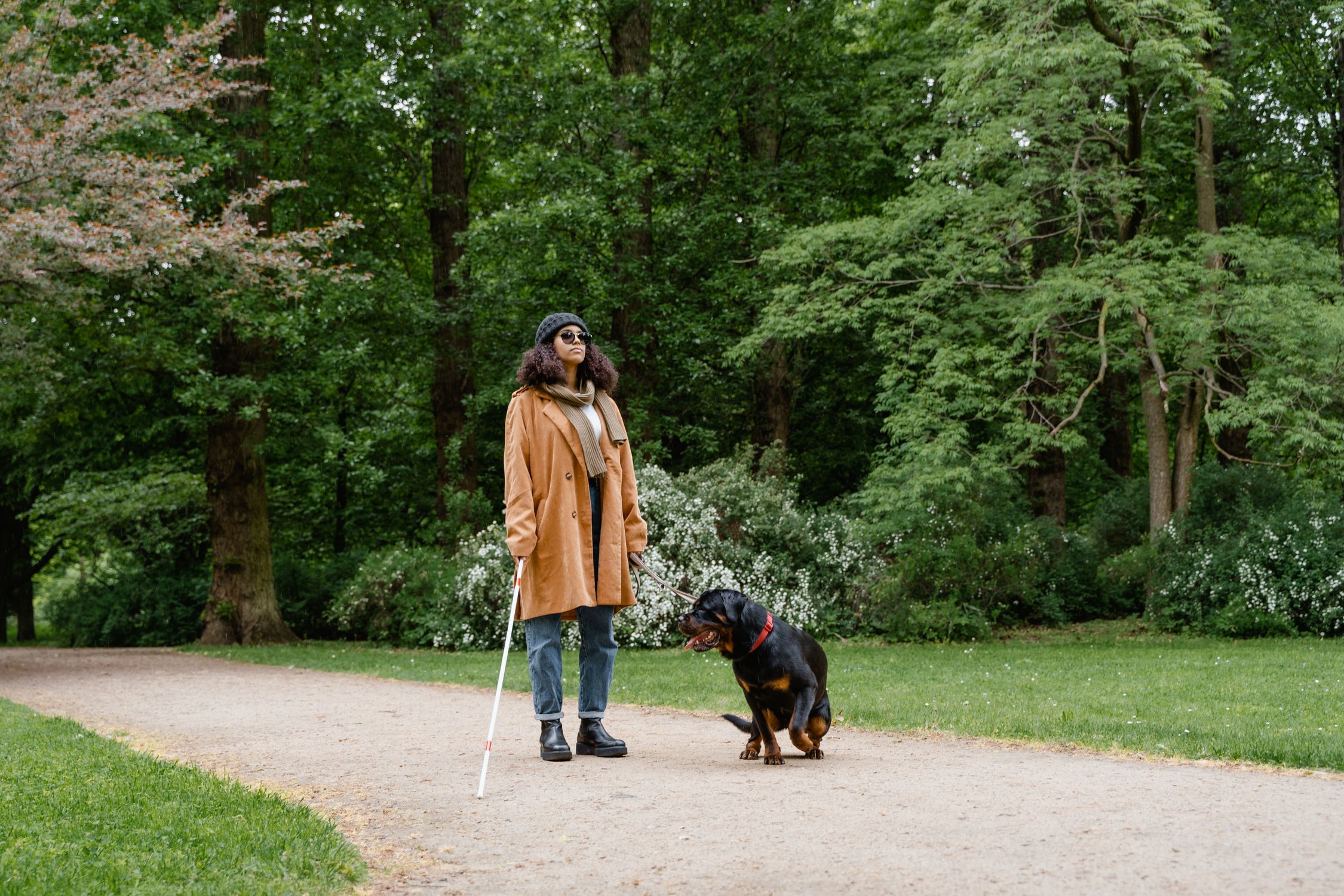
Hotel Stays: Making Unfamiliar Rooms Feel Like Home
Set Up a Consistent Layout
Blind dogs rely heavily on spatial memory. As soon as you enter the room, place the food bowl, water dish, and bed in the exact same configuration they occupy at home. This “anchor” system lets the dog map the new space quickly, reducing anxiety and the risk of head collisions.
Use a Halo Bumper Harness for Blind Dogs
The Muffin’s Halo Blind Dog Harness — Halo Bumper System adds a forward-facing ring that physically contacts obstacles before the dog’s head does. In a hotel room with unfamiliar furniture, the halo acts as a tactile warning, preventing bumps and bruises.
- ASIN: B00IV4XJ4Y
- Price: $27-$55 | Sizes: XS-XL | Features: padded wing, machine washable, forward-facing halo
- Pros: Prevents head trauma, distributes pressure evenly, easy to clean.
- Cons: May take 1-2 weeks for the dog to adjust; halo can snag in narrow doorways.
Muffin’s Halo Blind Dog Harness on Amazon
Noise Management
Even deaf dogs can be startled by sudden vibrations (e.g., elevator movement). Place a soft rug near the door to dampen floor vibrations. For deaf dogs, the vibration collar can be used to give a “stay” cue before the elevator doors close, ensuring the dog stays seated.
Safety Checks
Before leaving the room, do a quick sweep: ensure cords are out of reach, windows are closed, and any small objects that could be knocked over are secured. Blind dogs may bump into a loose shoe; a halo harness will give them a warning before impact.

Outdoor Trail Access: Confidence on the Path
Pre-Trip Trail Reconnaissance
Study trail maps online and note any steep drop-offs, water crossings, or dense brush. For blind dogs, the halo harness will alert them to low branches and rocks. For deaf dogs, the vibration collar can signal “stop” or “turn” when you need to change direction.
Leash Discipline
AAHA emphasizes that both blind and deaf dogs must stay leashed in unfamiliar outdoor settings. A sturdy 6-ft leash with a padded handle gives you tactile feedback on the dog’s movements. See DogTrekker’s expert guidance on traveling with blind or deaf dogs for more trail-specific tips.
Touch Command Training
Touch cues become the primary language for dogs that lack sight and sound. Consistently use a light tap on the back for “sit,” a gentle stroke on the side for “down,” and a firm press on the chest for “come.” Pair each cue with a high-value treat to reinforce the behavior. According to VCA Animal Hospitals, training sessions of 15 repetitions per cue, performed daily, solidify the association.
GPS Tracking on the Trail
Even with a leash, a sudden slip can happen on rocky terrain. The Fi Series 3 GPS Smart Collar offers real-time location data and escape alerts. Set a geofence around the trailhead; if the collar exits, you’ll receive a push notification, allowing you to locate the dog quickly — even in dense woods where GPS can lag 10-30 seconds.

Training and Communication: Building Trust Without Sight or Sound
Touch-Based Cue System
- Tap on the back — “Sit”
- Stroke on the side — “Down”
- Press on the chest — “Come”
- Light squeeze on the neck — “Stay”
Practice these cues in short, 5-minute sessions twice daily. Begin in a low-distraction area, then gradually add background noises (traffic, crowds) to simulate travel environments.
Vibration Collar Conditioning
- Introduce the collar without activating vibration. Let the dog wear it for 5-10 minutes while receiving treats.
- Pair vibration with a treat: a single buzz followed immediately by a favorite snack. Repeat 15 times per session.
- Add a cue: after the dog learns that vibration means “come,” use the remote from a distance to reinforce recall.
VCA Animal Hospitals notes that 15 repetitions per session are sufficient for most dogs to associate vibration with the desired action. For deeper behavioral context, your veterinarian or a board-certified veterinary behaviorist can provide tailored guidance on deaf and blind dog communication protocols.
Halo Harness Acclimation
Allow the dog to explore the halo ring in a safe indoor space. Reward calm behavior with treats and praise. Gradually increase the time the dog wears the harness, aiming for at least 30 minutes before the first travel day. Patience is key; some dogs need up to two weeks to accept the extra structure.
Essential Gear for Blind and Deaf Dogs
Muffin’s Halo Blind Dog Harness — Halo Bumper System
- ASIN: B00IV4XJ4Y
- Price: $27-$55
- Key Features: Padded wing harness, forward-facing halo bumper ring, machine-washable, sizes XS-XL.
- Why It Helps: Gives blind dogs a physical warning before head contact, essential for hotel rooms, vacation rentals, and rugged trail terrain.
PetSafe Vibration Remote Training Collar — Communication Tool for Deaf Dogs
- ASIN: B004HUJMK8
- Price: $40-$75
- Key Features: Vibration-only, 300-yard range, waterproof to 5 ft, 1.5 oz receiver, rechargeable.
- Why It Helps: Provides a silent, humane way to get a deaf dog’s attention when you’re out of arm’s reach — perfect for fenced yards, dog parks, and off-leash moments on the trail.
Fi Series 3 GPS Smart Collar — Real-Time Location Tracker
- ASIN: B09Q3LMQRP
- Price: $149-$199
- Key Features: GPS + LTE + Wi-Fi, 3-month battery, escape alerts, nationwide cellular coverage, water-resistant, community lost-dog network.
- Why It Helps: Offers instant location data and escape-zone alerts for blind or deaf dogs who might wander in unfamiliar surroundings.

Health and Safety Checklist for the Road
| Item | Why It Matters | How to Use |
|---|---|---|
| Vet-approved vaccinations | Prevents disease exposure in new locales | Carry proof of vaccination |
| First-aid kit | Immediate response to minor injuries | Include gauze, antiseptic wipes, tweezers |
| Portable water and collapsible bowl | Keeps dog hydrated; familiar bowl reduces confusion | Place bowl in the same spot each night |
| Travel-size medication | Addresses motion sickness or anxiety | Follow vet dosage instructions |
| GPS collar with geofence | Real-time tracking if dog becomes disoriented | Set safe-zone radius before departure |
| Halo harness (blind dogs) | Prevents head collisions with unknown obstacles | Adjust fit snugly but comfortably |
| Vibration collar (deaf dogs) | Remote communication when out of sight | Train with vibration-treat pairing first |
| Touch-command cue sheet | Quick reference for consistent signals | Keep laminated and pocket-size |
For additional veterinary context on pet travel safety, consult your own veterinarian before the first big trip — they know your dog’s specific sensory history and can tailor advice for the road.
Destination Selection: Choosing Dog-Friendly Environments
Not every destination is equally suited for a sensory-impaired dog’s first big trip. Here are characteristics to prioritize when selecting where to go:
Accessible terrain — Flat, paved walking surfaces in urban destinations (think Portland’s waterfront or Vancouver’s seawall) are far more navigable for a blind dog than rocky mountain trails on the first trip. Build up to more challenging terrain progressively, just as you would with a sighted dog new to hiking.
Quiet neighborhoods — Dense urban noise can overwhelm a dog relying entirely on smell and vibration. Seek accommodation in quieter residential areas rather than nightlife districts. A dog that can smell and feel its environment without sensory overload from crowds will acclimate faster and show fewer stress behaviors.
Fenced parks — Off-leash time matters for mental health, but only in fully fenced enclosures. Before traveling, search “fully fenced dog park” + your destination city to confirm one is accessible. The Fi Series 3 GPS collar provides a backup layer; use both the fence and the geofence together.
Pet-welcoming accommodation — Properties that include a ground-floor unit or single-story layout reduce elevator anxiety for deaf dogs and staircase navigation challenges for blind ones. When booking, call ahead and request the room type explicitly rather than relying on the pet-friendly checkbox alone.
Traveling 35,000 estimated fully deaf dogs and their estimated 120,000 additional single-ear hearing loss companions represents a growing cohort of adventure-ready pets. With the right preparation, their journeys don’t look any different from those of a fully sighted, fully hearing dog — just better-equipped.
Final Thoughts: Confidence Through Preparation
Blind and deaf dogs thrive on routine, tactile cues, and the reassurance that comes from a well-planned travel strategy. By consulting your veterinarian, establishing a reliable touch-command system, and equipping your pet with a halo harness, vibration collar, and GPS tracker, you transform potential uncertainty into shared adventure. Remember, the goal isn’t to “fix” the disability — it’s to adapt the environment so your dog can explore with confidence and joy.
Related Reading
Get price-drop alerts and new guides from DogTripGuide
One email a week: price drops on the gear we recommend, new guides, and what changed. No spam, unsubscribe anytime.