Flying to Hawaii With Your Dog: 2026 Requirements Guide
The complete 2026 guide to flying to Hawaii with your dog. Avoid quarantine with the Direct Airport Release program — step-by-step checklist, costs, and airline options.

This post may contain affiliate links. Disclosure
Updated for 2026 with current Hawaii Department of Agriculture requirements, airline policies, and the latest quarantine exemption procedures.
Hawaii is the only US state that requires a quarantine period for incoming pets. That single fact has stopped countless dog owners from visiting the islands, and understandably so. Nobody wants their dog locked in a facility for 120 days while they are supposed to be on vacation.
But here is the good news: Hawaii’s Direct Airport Release program, also called the 5-Day-Or-Less program, allows dogs that meet specific pre-arrival requirements to be released at the airport on the same day they land, with no quarantine at all. My wife and I successfully brought our Labrador, Koa, to Maui using this program, and he was in our rental car within two hours of landing.
The catch is that the process requires meticulous planning. Miss one step, get one date wrong, or forget one document, and your dog could face up to 120 days in quarantine. This guide walks you through every single step so that does not happen.
Understanding Hawaii’s Quarantine System
Hawaii is rabies-free. It has never had a case of rabies in its history, and the state is determined to keep it that way. The quarantine system exists to prevent rabies from entering the islands.
Three Possible Outcomes When You Arrive
| Outcome | What Happens | Why |
|---|---|---|
| Direct Airport Release | Dog is inspected and released at the airport within hours | All requirements met, documents verified |
| 5-Day Quarantine | Dog held at the Animal Quarantine Station for up to 5 days | Minor documentation issues or timing problems |
| 120-Day Quarantine | Dog held for up to 120 days | Major requirements not met (missing titer test, insufficient waiting periods, etc.) |
The 120-day quarantine costs approximately $14 per day at the Hawaii Department of Agriculture Animal Quarantine Station in Halawa Valley on Oahu. That is roughly $1,680 for the full period, plus the emotional toll on both you and your dog. It is not a pleasant facility, it is functional, and your dog will be in a kennel for the duration.
The goal of this guide is to ensure you get the direct airport release.
Step-by-Step: The Direct Airport Release Program
Step 1: Microchip Your Dog
Your dog must have an ISO-compliant microchip (ISO 11784/11785, 15-digit format). The microchip must be implanted before your dog’s rabies vaccinations. If your dog already has a microchip and has been vaccinated, you are fine as long as the microchip was in place at the time of the most recent rabies shot.
If you need to start from scratch, get the microchip first, then schedule vaccinations.
Timeline: Do this as early as possible. The microchip itself has no waiting period, but everything else depends on it being in place.
Step 2: Two Rabies Vaccinations
Your dog needs a minimum of two rabies vaccinations, administered more than 30 days apart. Both vaccinations must be given after the microchip is implanted.
Important details:
- The first vaccination can be given at any age after 3 months
- The second vaccination must be given at least 30 days after the first
- Both vaccinations must be current (not expired) at the time of arrival in Hawaii
- Puppy rabies shots count as the first vaccination if the microchip was already implanted
Timeline: If starting from scratch, you need at least 30 days between vaccinations, plus the waiting period for the blood test (see Step 3). Starting the process at least 3–4 months before your trip gives you comfortable margin for scheduling, lab processing, and document submission.
Step 3: OIE-FAVN Rabies Blood Test (Titer Test)
After the second rabies vaccination, you must have a blood sample drawn and sent to an approved laboratory for an OIE-FAVN (fluorescent antibody virus neutralization) test. This test measures the level of rabies antibodies in your dog’s blood.
Approved laboratories include:
- Kansas State University Rabies Laboratory (most commonly used for US residents)
- Department of Veterinary Services Laboratory in Ames, Iowa
- Several international labs approved by Hawaii DOA
Requirements:
- Blood must be drawn more than 30 days after the most recent rabies vaccination
- The test result must show a titer of 0.5 IU/mL or greater (this indicates adequate antibody levels)
- You must wait at least 30 days from the date the lab received your blood sample before your dog can arrive in Hawaii
- The OIE-FAVN test result is valid for 36 months from the date blood was received at the laboratory — so you do not need to retest for subsequent trips within that window
Important: The 30-day waiting period begins the day after the laboratory (KSU, AU, or DOD) receives your dog’s blood sample — not the date results are returned to you. KSU and DOD will send results directly to Hawaii DOA if “Hawaii” is listed as the destination on the lab submission form.
Kansas State University typically returns results in 2–3 weeks. The test costs approximately $100–150.
Timeline: Have blood drawn at least 2.5–3 months before your planned arrival (to account for vaccination spacing, blood draw timing, and document processing).
Step 4: Tick and Parasite Treatment
Within 14 days of arrival in Hawaii, your dog must be treated for ticks with a product effective against Rhipicephalus sanguineus (the brown dog tick). Approved products include Frontline (fipronil), NexGard, Bravecto, or Simparica.
Your veterinarian must document the treatment on the health certificate.
Step 5: Health Certificate and USDA Endorsement
Within 14 days of arrival, obtain a health certificate from your veterinarian (USDA Form 7001 for US residents). The certificate must then be endorsed by your USDA APHIS Veterinary Services office.
The health certificate must include:
- Microchip number (verified by scanning)
- Record of both rabies vaccinations with dates, manufacturer, and lot numbers
- Tick treatment record
- Statement that the dog is free from visible signs of disease
Timeline: Schedule the vet visit 10-14 days before departure. Allow 2-3 business days for USDA endorsement. Some APHIS offices offer same-day or next-day endorsement.
Step 6: Submit Documents to Hawaii DOA
You must submit the following documents to the Hawaii Department of Agriculture Animal Quarantine Station at least 10 days before arrival:
- Completed Dog and Cat Import Form (AQS-279)
- Copy of the OIE-FAVN test results
- Copy of rabies vaccination certificates (both vaccinations)
- Processing fee payment ($185 for direct airport release as of 2026)
Submit online through the Hawaii DOA pet quarantine portal or mail to the Animal Quarantine Station. Online submission is strongly recommended for faster processing and confirmation.
Step 7: Arrange Airport Inspection
Your dog must arrive at a designated airport during inspection hours. As of 2026, the airports with animal quarantine inspection stations are:
- Honolulu International Airport (HNL) - Primary facility, longest inspection hours
- Kahului Airport (OGG) - Maui
- Kona International Airport (KOA) - Big Island
- Lihue Airport (LIH) - Kauai
Inspection hours vary by airport. Honolulu has the most flexible hours (typically 8 AM to 9 PM). Neighbor island airports have more limited schedules. If you arrive outside inspection hours, your dog will be held overnight and inspected the next business day.
Complete Timeline Summary
| Timeframe Before Trip | Action |
|---|---|
| 3+ months | Implant microchip (if not already done with compliant ISO chip) |
| 3 months | First rabies vaccination (after microchip confirmed) |
| 2 months | Second rabies vaccination (30+ days after first) |
| 6 weeks | Blood draw for FAVN titer test (30+ days after second vaccination). 30-day waiting period begins when lab receives sample. |
| 4 weeks | Receive titer test results; confirm Hawaii DOA received results directly from lab |
| 10-14 days | Vet examination, tick treatment, USDA-endorsed health certificate |
| 10 days | Submit all documents to Hawaii DOA (AQS-279 form + fee payment) — must arrive at least 10 days before your dog |
| Day of travel | Fly to Hawaii with all original documents in carry-on |
Starting from scratch with a puppy or unvaccinated dog? Begin the process at least 4 months before your trip to comfortably clear all timing requirements. If your dog already has a compliant microchip and two current rabies vaccinations, the minimum timeline from blood draw to arrival is just 30 days.
Airline Options for Flying Dogs to Hawaii
Not all airlines that fly to Hawaii accept pets, and policies vary significantly.
Airlines That Fly Pets to Hawaii
| Airline | In-Cabin | Cargo | Notes |
|---|---|---|---|
| Hawaiian Airlines | Yes (under 25 lbs with carrier) | Yes | Most Hawaii routes, in-cabin only on mainland-Hawaii flights |
| Alaska Airlines | Yes (under 20 lbs with carrier) | Yes | Good cargo program, multiple mainland gateways |
| United Airlines | Yes (under 25 lbs with carrier) | Yes (PetSafe) | Largest route network to Hawaii |
| Delta Air Lines | No pets to Hawaii | No | Does not transport pets on Hawaii routes |
| Southwest Airlines | No Hawaii pet service | No | Does not allow pets on Hawaii flights |
| American Airlines | Limited | Cargo only for large dogs | Check current policy, changes frequently |
For large dogs: Alaska Airlines and United’s PetSafe program are the most reliable options for cargo transport to Hawaii. Hawaiian Airlines also handles cargo pets well given their extensive inter-island and mainland routes.
Booking Tips
- Book your dog’s space when you book your own ticket. Airlines limit the number of pets per flight.
- In-cabin pet fees to Hawaii range from $100-175 each way.
- Cargo fees range from $200-500 each way depending on crate size and airline.
- Flights from the West Coast (LAX, SFO, SEA, PDX) are 5-6 hours. That is a manageable duration for most dogs in cargo.
What to Bring to the Airport
Pack all of these documents in your carry-on, not in checked luggage:
- Original USDA-endorsed health certificate
- Original rabies vaccination certificates (both)
- Original OIE-FAVN test results
- Confirmation of Hawaii DOA document submission and payment
- Microchip documentation with the 15-digit number
- Copy of AQS-279 form
Additionally, bring:
- A microchip scanner (optional but helpful if there is a scanning issue)
- Water and a Bonza Collapsible Dog Bowl — the carabiner clips to your carry-on so it is always within reach
- Leash and collar with ID tags
- Any medications your dog needs
What Happens When You Land
When you arrive in Hawaii, you will proceed to the animal quarantine inspection area. The process typically works like this:
- Collect your dog from baggage claim (cargo) or deplane with them (in-cabin)
- Proceed to the inspection area following airport signs to the Animal Quarantine Station
- Present all documents to the inspector
- Microchip scan: The inspector will scan your dog’s microchip and verify it matches all documents
- Visual health inspection: The inspector checks for signs of illness
- Release or hold: If everything checks out, your dog is released to you
When we arrived in Kahului with Koa, the entire process took about 90 minutes. Most of that was waiting in line. The actual inspection was about 10 minutes. The inspectors were thorough but friendly.
Dog-Friendly Hawaii: What to Do After You Arrive
Once your dog clears inspection, Hawaii is a wonderful place for dogs. Here are some highlights by island.
Oahu
- Ala Moana Beach Park: Dog-friendly sections near the park’s west end
- Kailua Beach: Dogs allowed on leash during certain hours
- Hawaii Kai Dog Park: Fully fenced, well-maintained off-leash area
- North Shore Beaches: Many less-regulated beaches where dogs are common
Maui
- Baldwin Beach Park: Dog-friendly with plenty of space
- Kapalua Coastal Trail: Beautiful oceanside walk, dogs on leash
- Kula area hiking: Upcountry trails through eucalyptus forests
- Dog-friendly patios in Paia and Lahaina
Big Island
- Hapuna Beach State Park: Dogs allowed in designated areas
- Volcanoes National Park: Dogs allowed on some paved trails and in the drive-through areas (not backcountry trails)
- Kohala Coast resort areas: Many pet-friendly hotels and restaurants
Kauai
- Lydgate Beach Park: Calm waters, dog-friendly sections
- Poipu area: Multiple pet-friendly restaurants and shops
- Sleeping Giant Trail: Dogs allowed on leash
Pet-Friendly Accommodations in Hawaii
Hawaii’s pet-friendly accommodation scene has improved dramatically in recent years.
Hotels and resorts: Several major chains welcome dogs, including select Marriott, Westin, and Hyatt properties. The Westin Maui and Sheraton Waikiki both have pet programs. Expect pet fees of $50-150 per stay.
Vacation rentals: VRBO and Airbnb have extensive pet-friendly options across all islands. Rental houses with fenced yards are ideal. Many charge a modest pet fee ($50-100) or pet deposit.
Condos: Some condo complexes allow pets. Check individual building policies, as HOA rules override rental platform listings.
Common Mistakes That Lead to Quarantine
After researching dozens of cases where dogs were quarantined despite owners thinking they had followed the rules, here are the most common mistakes:
- Getting blood drawn too soon after vaccination: Must be more than 30 days after the most recent rabies shot
- Arriving before the 30-day waiting period ends: Count carefully from the date the lab received your blood sample, not when you submitted it or received results
- Expired rabies vaccination: Both vaccinations must be current at the time of arrival
- Microchip not implanted before vaccinations: The microchip must predate the rabies vaccinations on record
- Missing the 10-day document submission deadline: Documents must be received by Hawaii DOA at least 10 days before your dog’s arrival — not 10 days before you submit them
- Wrong microchip format: Must be ISO 11784/11785 compliant. Some older US microchips are not compatible — always verify
- Arriving outside inspection hours: Your dog will be held until the next inspection period, which may not be until the next morning
Cost Breakdown
| Item | Cost |
|---|---|
| Microchip implantation | $25-50 |
| Two rabies vaccinations | $30-60 total |
| OIE-FAVN titer test | $100-150 |
| Health certificate exam | $50-100 |
| USDA endorsement | $38 |
| Hawaii DOA processing fee | $185 |
| Airline pet fee (in-cabin, one way) | $100-175 |
| Airline pet fee (cargo, one way) | $200-500 |
| Total estimated (round trip, in-cabin) | $628-958 |
| Total estimated (round trip, cargo) | $828-1,283 |
Returning to the Mainland
The good news is that returning to the US mainland from Hawaii requires nothing special. There is no quarantine or documentation needed for domestic travel within the US. Simply book your flight and go.
If you are continuing to an international destination from Hawaii, you will need to follow that country’s import requirements.
Frequently Asked Questions
Can I bring my dog to Hawaii on a cruise ship? Most cruise lines that stop in Hawaii follow the same DOA requirements. Your dog would need to meet all the same criteria. In practice, very few people bring dogs on Hawaiian cruises.
What if my dog’s titer test comes back below 0.5 IU/mL? You will need to get another rabies booster, wait 30 days, and retest. The 30-day waiting period restarts from the new blood draw date.
Can puppies go to Hawaii? Yes, but puppies must be at least 9-10 months old by the time they arrive due to the vaccination and waiting period requirements.
Is there any way to shorten the 30-day waiting period after the blood draw? No. This is a firm rule with no exceptions. The waiting period begins the day after the lab receives your sample.
Final Thoughts
Flying to Hawaii with your dog is absolutely doable, but it requires more planning than almost any other domestic trip. Start the process at least six months before your intended travel date, follow every step precisely, and keep meticulous records. A well-fitted airline carrier is essential — the Sherpa Original Deluxe carries dogs up to 16 lbs and is Guaranteed On Board with Hawaiian Airlines, Alaska Airlines, and United. For anxious dogs, consider Zesty Paws Calming Chews during the 5-6 hour flight from the West Coast. The reward is sharing one of the most beautiful places on earth with your best friend.
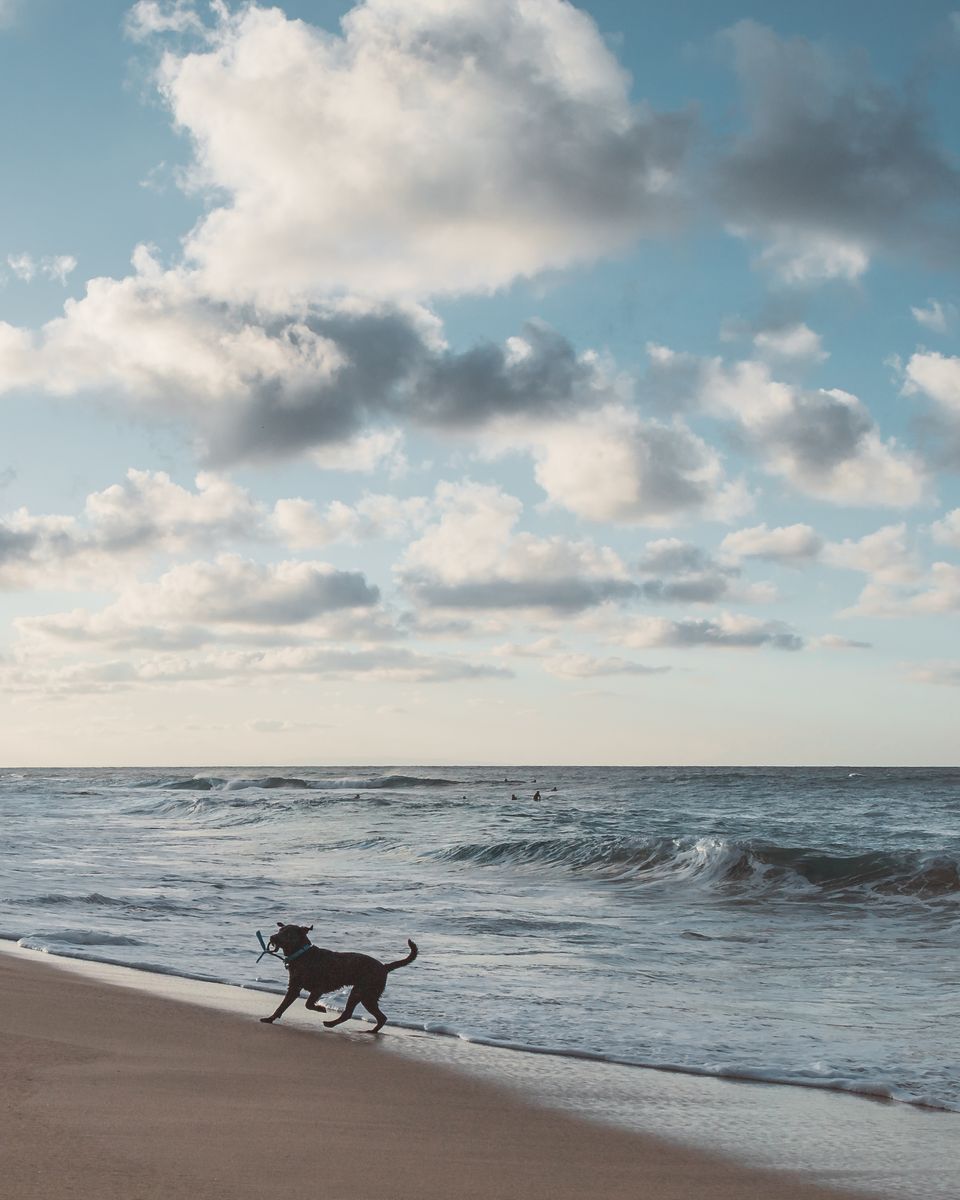
Koa loved Maui. The beach, the hiking, the restaurant patios, the constant attention from tourists who could not believe someone had brought a dog to Hawaii. It was worth every bit of the preparation.
You Might Also Like
- Airline Pet Policies: Complete Comparison Guide
- Pet Quarantine Countries: What You Need to Know
- Best Airline Dog Carriers in 2026
- Dog Health Certificate for Travel
- International Pet Travel Checklist
Official Resources:
- Hawaii Department of Agriculture Animal Quarantine Station — Official requirements, forms, and fee schedule
- USDA APHIS Pet Travel — Health certificate and USDA endorsement guidance
Get the best Pawventures tips in your inbox
Weekly guides, deals, and insider tips. No spam, unsubscribe anytime.