Boating With Your Dog: Complete Safety Guide 2026
Everything you need to know about boating with your dog. Safety equipment, boat types, training tips, sun and water hazards, and essential gear for dogs on boats.

This post may contain affiliate links. Disclosure
Updated for 2026 with current safety recommendations, gear reviews, and best practices for taking your dog on boats of all types.
Boating with a dog can be one of the great joys of summer, or it can be a stressful experience for everyone involved. The difference comes down to preparation, safety equipment, and understanding what your dog needs to be comfortable on the water.
After five years of boating with my Labrador Retriever, Captain (yes, that is actually his name), I have learned that dogs and boats are a natural combination when you set things up correctly. Captain has been on pontoon boats, sailboats, speedboats, fishing boats, and canoes. He has handled all of them well because I invested the time to introduce him properly and always prioritize his safety.
This guide covers every type of recreational boat, the safety equipment you need, how to train your dog for boating, and how to handle the situations that inevitably arise on the water.
Dog Safety Equipment
Dog PFD (Life Jacket)
A personal flotation device for your dog is the single most important piece of boating safety equipment. Period. Even dogs who are strong swimmers need a PFD on boats because:
- Falls from boats are sudden and disorienting. Even a strong swimmer can panic.
- Currents, waves, and wakes near boats can overwhelm a dog.
- Cold water causes rapid fatigue.
- The PFD’s dorsal handle allows you to lift your dog back onto the boat.
- Visibility: A bright PFD makes your dog visible if they fall in.
Note that while the U.S. Coast Guard certifies human life jackets under new 2025 classifications, there are currently no Coast Guard standards or certification requirements for dog PFDs. This makes fit testing and brand selection even more important — you are the quality control. The BoatUS Foundation has tested canine PFDs and found significant variation in buoyancy and construction quality across brands.
Choosing a PFD:
| Feature | Why It Matters |
|---|---|
| Dorsal handle | Essential for lifting your dog from the water |
| Bright color | Visibility in the water |
| Proper fit | Snug but not restrictive. Test before boating. |
| Buoyancy rating | Must support your dog’s weight |
| Belly strap | Prevents the PFD from riding up |
| Reflective trim | For low-light visibility |
Top recommendations:
- Ruffwear Float Coat ($80-100): Best overall. Excellent buoyancy, strong handle, natural swimming position.
- EzyDog Doggy Flotation Device ($50-70): Good buoyancy and a comfortable fit. Popular with boating dogs.
- Outward Hound Granby Splash ($25-40): Budget option with solid buoyancy.
For a full scored comparison — buoyancy, handle strength, sizing across breeds, and value — see our best dog life jackets for boating.
Non-Slip Mat
Boat surfaces (fiberglass, vinyl, aluminum) are slippery, especially when wet. A non-slip mat in your dog’s designated area prevents sliding and gives them confidence. Marine-grade non-slip pads, yoga mats, or even a simple bath mat work well.
Sun Protection
Dogs can get sunburned, especially those with light skin, pink noses, or thin fur. On boats, UV exposure is intensified by water reflection.
- Pet-safe sunscreen (Epi-Pet Sun Protector, My Dog Nose It) applied to nose, ears, and belly
- Shade: Ensure your dog has access to shade at all times (bimini top, umbrella, or a simple tarp)
- Cooling vest: For hot days on the water, an evaporative cooling vest is the most effective passive cooling tool — see our best dog cooling vests for summer travel for picks that stay cool even in humid marine conditions. The Ruffwear Swamp Cooler is a consistent top performer.
For more hot-weather safety strategies, see our guide to keeping your dog cool during summer travel.
Fresh Water
Always carry fresh water specifically for your dog. Dogs who drink lake water, river water, or especially salt water can get sick. Bring a non-spill water bowl (Yeti Boomer Dog Bowl or a suction-cup bowl that attaches to boat surfaces).
Boating by Boat Type
Pontoon Boats
Pontoon boats are the most dog-friendly boat type. Their wide, flat decks provide stable footing. The low freeboard (height from water to deck) makes it easier for dogs to get on and off. The open layout gives dogs space to move around.
Tips for pontoons:
- Designate a specific area for your dog with a non-slip mat and shade
- The swim platform at the rear is the easiest point for a dog to enter and exit the water
- Gate the bow area if your dog is prone to jumping
- Pontoon boats tend to move slowly, which dogs generally prefer over speed
Sailboats
Sailboats present unique challenges: the heeling (tilting) motion, the boom swinging overhead, and the various lines and hardware create potential hazards.
Tips for sailboats:
- Attach safety netting to the lifelines (the cables running around the deck) to prevent your dog from sliding overboard during a heel
- Keep your dog in the cockpit, not on the foredeck
- Train your dog to stay low and centered
- Be aware of the boom during tacking and jibing; dogs should be below boom height
- The motion of sailing can cause motion sickness in some dogs (see below)
Speedboats and Ski Boats
Fast boats create wind, spray, and sudden movements that can startle dogs.
Tips:
- Secure your dog before operating at speed
- A crate or harness tethered to a secure point prevents sliding during acceleration and turns
- Start with slow speeds and gradually increase as your dog acclimates
- The wake zone behind the boat while watersports are happening is dangerous for a dog in the water. Never let your dog swim behind the boat while towing.
Fishing Boats
Small fishing boats (bass boats, jon boats) are common for dog owners.
Tips:
- Weight distribution matters more on small boats. Position your dog for optimal balance.
- Keep hooks, lures, and fishing line away from your dog. Ingested hooks or tangled line are veterinary emergencies.
- Fish bait and catch should be kept in a sealed cooler inaccessible to your dog.
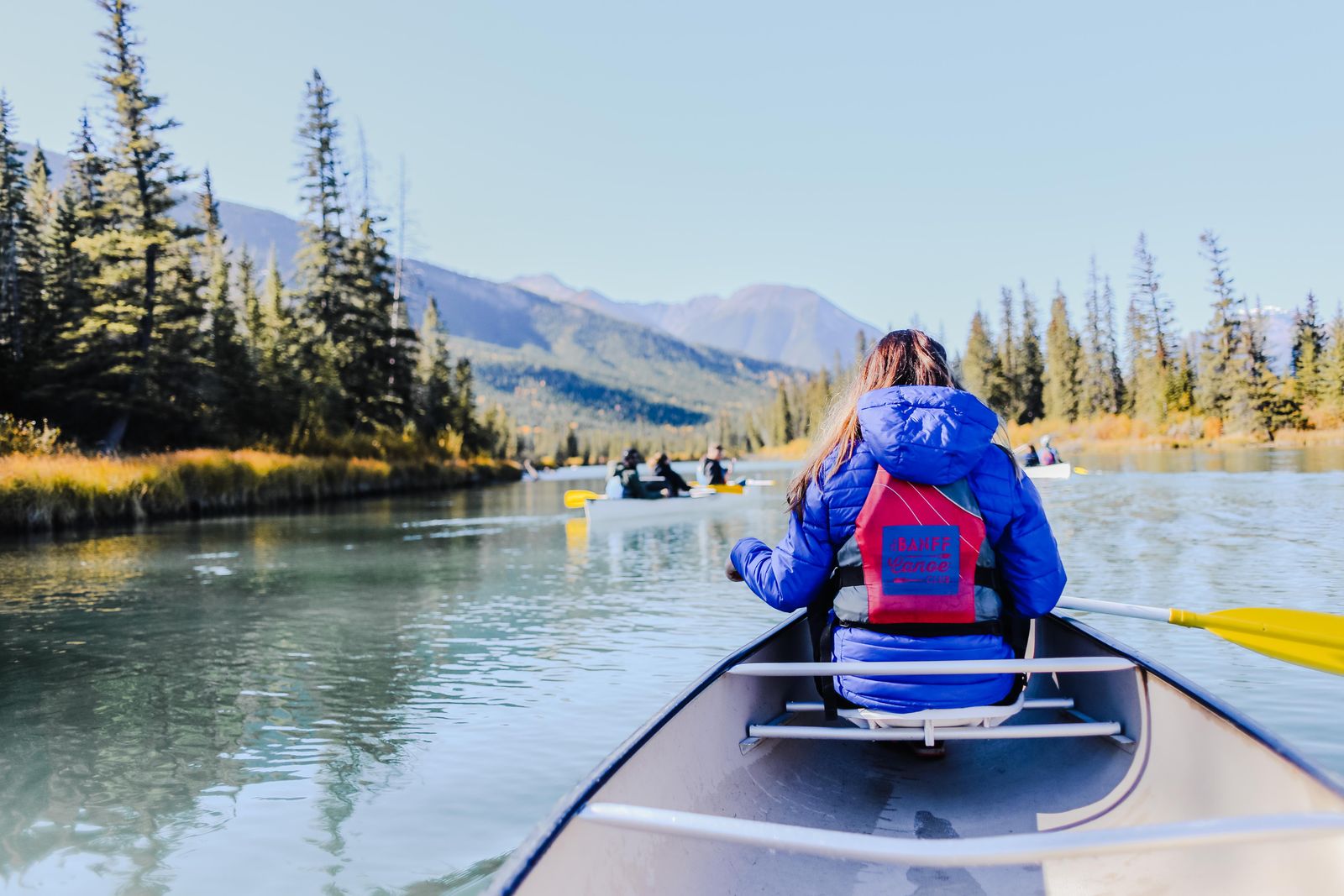
Canoes
Canoes and dogs have a long history, and the combination works well with proper setup.
Tips:
- Your dog should sit or lie on the floor of the canoe, ideally in the center. A non-slip pad prevents sliding.
- Dogs standing in canoes shift the center of gravity. Train the “down” command for canoe use.
- Tandem canoes with the dog in the center provide the best stability.
- If the dog jumps out (which happens), grab the gunwale and lean the opposite way to avoid capsizing.
If you enjoy paddle sports with your dog, see our full kayaking with your dog guide for paddle-specific safety tips.
Training Your Dog for Boating
Introduction Process
Step 1: The boat at rest (on the trailer or docked)
- Let your dog explore the boat at their own pace
- Reward with treats for getting on and settling
- Practice sitting and lying down on the boat
- Spend 15-20 minutes per session for several days
Step 2: The boat in calm water (docked or anchored)
- Sit on the boat with your dog at a dock or mooring
- Let the boat rock gently with the water
- Reward calm behavior
- If your dog shows stress, return to shore and try again later
Step 3: Short, slow trips
- Start with 15-30 minute trips on calm water
- Move slowly (idle or slow speed)
- Monitor your dog’s comfort level
- Return to shore if they show signs of distress
Step 4: Gradually increase duration and conditions
- Extend trip time as your dog gains confidence
- Introduce moderate speed
- Try different water conditions (light chop, light wind)
- Always have an escape plan (a nearby shore) in case your dog needs a break
Teaching the Re-Entry
Your dog will eventually end up in the water, whether intentionally (jumping in to swim) or accidentally (falling). Practice getting your dog back on the boat:
- From the swim platform/ladder: The easiest option. Lure your dog to the platform with treats and help them climb up. Many dogs figure this out quickly.
- From the side: Grab the PFD handle and lift. For smaller dogs, you can lift them directly. For larger dogs, you may need to partially enter the water.
- From a canoe/kayak: Approach from the widest part of the hull. Lean slightly away from the dog while pulling them over the gunwale.
Practice in controlled conditions (calm water, shallow depth) so it is familiar when it happens for real.
Health and Safety Concerns
Motion Sickness
Some dogs get seasick, especially on their first few boat trips. Symptoms include:
- Excessive drooling
- Yawning
- Whining
- Vomiting
- Lethargy
Prevention and treatment:
- Withhold food for 2-3 hours before boating
- Provide fresh air (not in an enclosed cabin)
- Keep trips short initially
- Ginger treats may help (some dogs benefit from ginger as a natural anti-nausea aid)
- Your vet can prescribe anti-nausea medication (meclizine or maropitant/Cerenia) for dogs with persistent motion sickness
Most dogs overcome motion sickness with repeated exposure. If your dog does not improve after 4-5 trips, boating may not be their thing.
Water Intoxication
Water intoxication (hyponatremia) occurs when a dog ingests too much water, diluting sodium levels in the blood. It can happen when dogs repeatedly retrieve toys from the water, play in sprinklers or hoses, or swim with their mouths open.
Signs:
- Bloating
- Lethargy
- Loss of coordination
- Vomiting
- Glazed eyes
- Seizures (severe cases)
Prevention:
- Limit water fetch sessions to 10-15 minutes
- Take breaks from water play
- Use flat toys (frisbees) rather than balls that require dogs to open their mouths wide in water
- Monitor how much water your dog is ingesting during play
Water intoxication is a genuine emergency. If you suspect it, get your dog to a veterinarian immediately.
Salt Water Ingestion
Dogs who swallow salt water while swimming or playing in the ocean can develop salt toxicosis. Symptoms include vomiting, diarrhea, tremors, and seizures.
Prevention:
- Provide fresh water frequently to reduce the urge to drink salt water
- Limit salt water swimming sessions
- Rinse your dog with fresh water after ocean exposure
Ear Infections
Dogs who swim frequently are prone to ear infections. Water trapped in the ear canal creates conditions for bacterial and yeast growth.
Prevention:
- Dry your dog’s ears thoroughly after every water exposure
- Use a veterinary ear drying solution after swimming
- Dogs with floppy ears (Labs, Goldens, Spaniels) are most susceptible
Sun Exposure
Prolonged sun exposure can cause heatstroke, sunburn, and eye damage in dogs.
Prevention:
- Always provide shade on the boat
- Apply pet-safe sunscreen to vulnerable areas
- Keep fresh water available at all times
- Watch for signs of overheating: excessive panting, drooling, bright red tongue
- Limit sun exposure on extremely hot days
Always carry a pet first aid kit on the water for any emergencies that arise during your boating day.
Boarding and Ramp Systems
Getting a dog on and off a boat can be challenging, especially for older dogs or those with mobility issues.
Solutions:
- Swim platform with ramp: Many pontoon boats and larger vessels have swim platforms that dogs can walk onto from a dock
- Dog boat ramp: Products like the Paws Aboard Dog Boat Ramp ($100-200) provide a low-angle ramp from water to deck
- Dog boat ladder: The WAG Boarding Steps or Paws Aboard Dog Boat Ladder attach to the side of the boat and provide steps for dogs to climb from the water
- Manual assist: For smaller dogs, simply lifting them on and off is easiest
Laws and Regulations
Boating laws regarding dogs vary by state:
- Most states require PFDs for dogs on commercial vessels
- Some states count dogs toward maximum capacity limits
- Leash laws may apply at marinas and boat launches
- Some lakes and waterways restrict dogs during specific seasons
Check your state’s boating regulations through the U.S. Coast Guard’s Boating Safety Resource Center and any specific rules for the body of water you plan to use.
Boating Etiquette With Dogs
- Keep your dog under control at marinas and boat launches
- Clean up after your dog at launch ramps and docks
- Do not let your dog swim near other boats without permission
- Minimize barking (especially in anchorages and marinas)
- Alert other boaters if your dog is in the water
- Do not leave your dog unattended on a boat
Budget Planning
| Item | Cost |
|---|---|
| Dog PFD | $25-100 |
| Non-slip mat | $15-30 |
| Pet-safe sunscreen | $10-20 |
| Non-spill water bowl | $20-40 |
| Dog boat ramp/ladder | $100-200 |
| Ear drying solution | $10-15 |
| Cooling vest | $50-80 |
| Total essential gear | $230-485 |
Best Boating Destinations for Dogs
Lakes
- Lake Tahoe, CA/NV: Crystal-clear water, dog-friendly beaches around the lake
- Lake George, NY: Charming Adirondack setting, dog-friendly marinas
- Lake Powell, UT/AZ: Houseboating with dogs in stunning canyon scenery
- Lake Michigan (various): Large, ocean-like lake with dog-friendly beaches
- Flathead Lake, MT: Pristine Montana lake with dog-friendly access
Coastal
- Florida Keys: Calm, warm waters ideal for dogs
- Chesapeake Bay, MD/VA: Protected waters with abundant wildlife
- Puget Sound, WA: Island hopping with dogs — see our Pacific Northwest road trip guide for the full region
- Lake Champlain, VT/NY: Scenic boating with mountain views
Final Thoughts
Boating with a dog is one of summer’s great pleasures, but it demands respect for the water and a commitment to your dog’s safety. Captain has been on more boat trips than I can count, and his enthusiasm for the water has never faded. He knows the routine: PFD goes on, he settles into his spot on the deck, and we push off into whatever lake, river, or bay we are exploring that day.
The investment in safety gear, training, and preparation pays dividends in the form of shared experiences on the water that would not be the same without him.
Related Reading
Get the best Pawventures tips in your inbox
Weekly guides, deals, and insider tips. No spam, unsubscribe anytime.