Best Crash-Tested Dog Car Harnesses 2026: Ranked by Safety
Only harnesses that passed real crash tests make this list. CPS and FMVSS 213-tested picks ranked by test standard tier, then price — plus how to spot the imposters.
This post may contain affiliate links. Disclosure
Here’s something the pet industry doesn’t advertise loudly enough: most dog car harnesses on the market have never been crash-tested. They’ve been marketed as “safety harnesses,” photographed in cars, and priced like they know something — but put them in an actual sled test at 30 mph and they fail. Straps snap. Buckles shear. The dog becomes a projectile.
A 10-pound dog in a 50 mph collision hits with 500 pounds of force. An 80-pound dog at 30 mph generates roughly 2,400 pounds — about the weight of a small car pressing against whatever is in the way. The math makes the marketing problem obvious: if a harness hasn’t been tested, you don’t actually know what it does in a crash.
This guide covers only the harnesses that have been through verified crash testing — and explains exactly what each test standard means, so you can evaluate future claims yourself.
Quick answer: Most dog car harnesses have never been crash-tested. Only a handful pass real testing, and the top tier in 2026 is the Sleepypod Clickit Sport Plus. The Kurgo Enhanced Strength Tru-Fit is the best value, the EzyDog Drive wins on daily usability, and Ruffwear Load Up suits escape artists.
What “Crash Tested” Actually Means
Not all crash tests are equal. There are three main test standards you’ll encounter:
Center for Pet Safety (CPS) Certification: The gold standard in the US. CPS runs independent tests at a certified NHTSA-approved facility using the same protocols applied to child restraint systems. A five-star CPS rating is the highest tier available. Only a small number of harnesses have earned it, and the CPS website publishes all results — including failures.
FMVSS 213 (Federal Motor Vehicle Safety Standard No. 213): The federal child restraint standard that CPS testing references. Some manufacturers have their harnesses tested to this standard at independent labs without CPS certification. The standard requires a simulated 30 mph frontal collision with specified dummy loads. A harness “tested to FMVSS 213” is meaningful — it’s the same benchmark used for child car seats.
Other independent testing: Some international harnesses are tested under European (ECE R-17) or Australian automotive safety standards. These are real tests with real methodology, but they’re harder to verify independently.
Red flags: “Crash-resistant design,” “safety-inspired construction,” “laboratory-grade materials.” None of these phrases mean a crash test occurred. Always ask: which testing facility, which standard, and where are the published results?
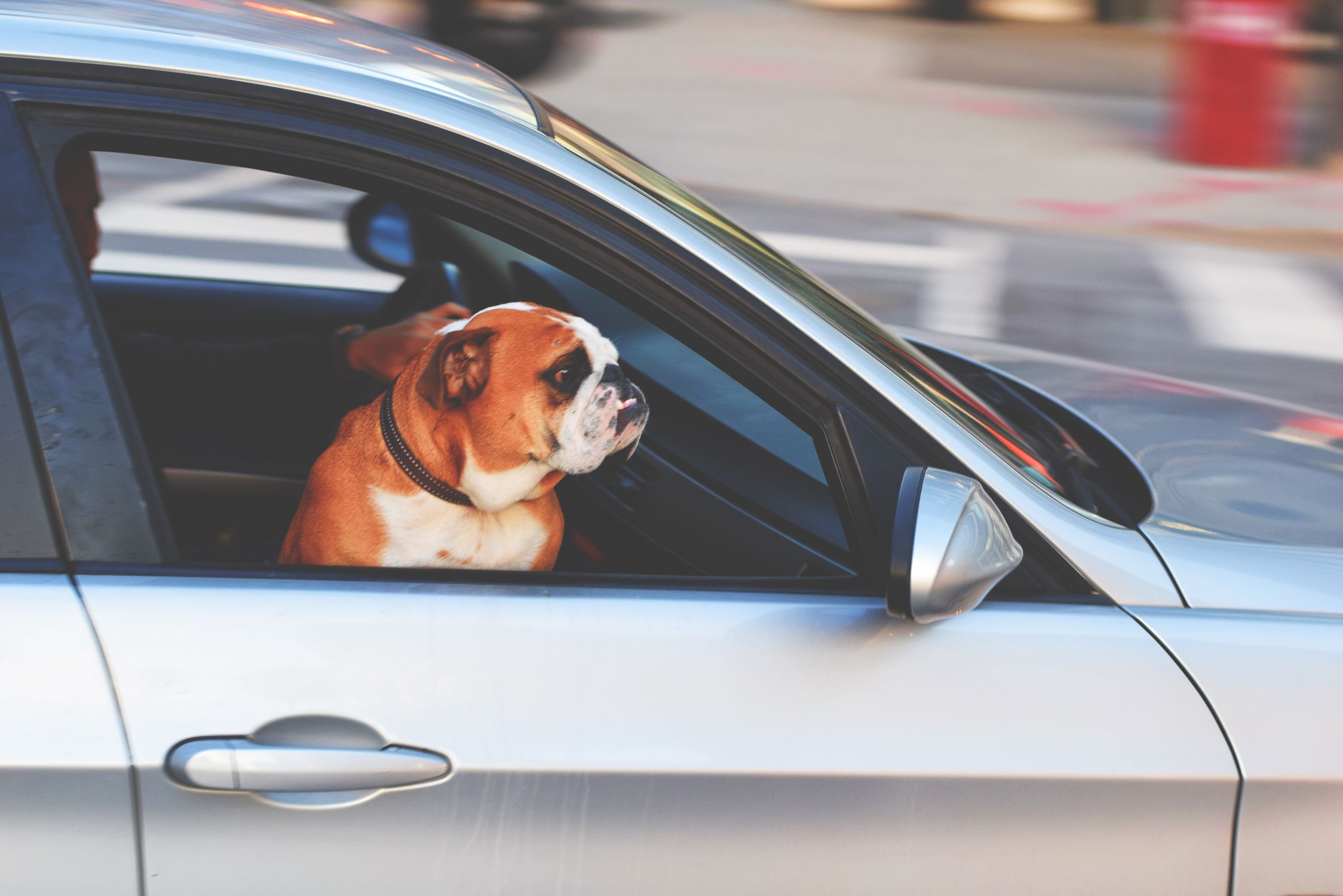
 Photo by Nate Aguilar on Pexels
1. Sleepypod Clickit Sport Plus — Best Overall / Highest Certification Tier

The verdict: The Clickit Sport Plus is the only dog harness to earn both CPS certification and a five-star rating. That distinction matters: a five-star CPS result means the harness not only survived the crash test but controlled the dummy dog’s movement within acceptable injury-risk thresholds. It is, by the most rigorous available standard, the safest harness money can buy.
Who it’s for: Any dog owner who prioritizes verified safety above all else — especially those traveling with medium to large dogs on highways. Sized for dogs from 18 to 90+ pounds depending on version.
Specs:
- Test standard: CPS certified, five-star rating; tested to US, EU, and Canadian child safety standards
- Sizes: Small, Medium, Large, X-Large
- Design: Infinity Loop webbing distributes crash forces across the chest and back, not just the neck
- Doubles as a walking harness with rear leash attachment
- Reflective strips on front and back for visibility
- Available in multiple colors
Pros: Highest verifiable safety certification available; Infinity Loop design genuinely reduces injury force distribution; doubles as a walking harness reducing the need for gear-switching; light and padded for all-day comfort
Cons: On the premium end of the price spectrum; can feel snug on dogs with very deep chests; some reviewers report strap adjustment takes practice the first time; the “Sport Plus” bundle variant includes extra accessories — confirm you’re buying the correct SKU for your dog’s size
2. Kurgo Enhanced Strength Tru-Fit — Best Value Crash-Tested Harness

The verdict: The Kurgo Tru-Fit is where most dog owners land when they want real crash protection without the Sleepypod price tag. It’s been tested to FMVSS 213 at an independent facility, comes with a steel-carabiner seatbelt tether included in the box, and covers dogs from 5 to 105 pounds across five size options. That range alone makes it the most versatile pick in this roundup.
Who it’s for: Owners who want verified crash protection at a price point that doesn’t require deliberation — and who have dogs at either end of the size spectrum where other harnesses don’t reach.
Specs:
- Test standard: FMVSS 213 tested (crash test certified fit)
- Sizes: X-Small through X-Large (5–105 lbs)
- Five adjustment points for precise fit
- All-steel nesting-style buckles — no plastic at the critical junctions
- Includes seatbelt tether with steel carabiner
- Front and back D-ring leash attachment points
- Machine washable
Pros: Excellent size range covers almost every breed; included seatbelt tether means no extra purchase; five adjustment points give a more snug fit than many competitors; machine washable; Kurgo lifetime warranty
Cons: The five adjustment points are a pro for fit but a con for morning-rush ease of use — it takes longer to put on than single-buckle designs; can feel restrictive on barrel-chested breeds like Bulldogs and Staffordshire Terriers
3. EzyDog Drive Safety Harness — Best Everyday Usability

The verdict: EzyDog’s Drive harness solves the biggest usability problem with crash-tested harnesses: the daily on/off ritual. EzyDog designed the Drive for what they call “one-time fit” — you adjust it once to your dog’s measurements, and from then on you feed the seatbelt through both webbing handles and click it in. Ten seconds, every trip. It carries an impressive 4.2 out of 5 stars from nearly 700 Amazon reviews.
Who it’s for: Daily commuters, errand runners, and frequent short-trip dog travelers who need a harness that cooperates on a busy morning.
Specs:
- Test standard: Certified to US-FMVSS 213 (tested at Australian Automotive Safety Engineering facility)
- Sizes: Small, Medium, Large (up to 65 lbs)
- Material: Aluminum alloy Tri-Glides, vehicle-tested seatbelt webbing, Crosslink Technology
- EVA foam padding with grooved ventilation channels
- Dual steel D-ring leash attachment
- Seatbelt feeds through webbing handles — no extra tether needed
Pros: Fastest install-per-trip of any harness in this list once fitted; EVA padding makes it genuinely comfortable for extended rides; dual D-rings work equally well for front-clip no-pull walking; FMVSS 213 certified; real-world ratings confirm performance
Cons: Maximum weight of 65 lbs excludes large breeds like German Shepherds and Labrador Retrievers; not CPS-certified (Australian lab testing, not NHTSA facility); only three size options, which can leave some dogs between sizes
 Photo by Marcus Christensen on Pexels
4. CarSafe Crash Tested Dog Safety Harness — Best for Large Dogs

The verdict: CarSafe (from the makers of Halti, the well-regarded head collar brand) built their harness to a specific target: dogs up to 32 kg / 70 lbs, tested to prove it. The crash test certification reaches beyond what many US-focused brands claim, and the build — X-Cross design using seat-belt-grade webbing — shows engineering thought rather than just marketing. It carries 4.2 out of 5 stars from over 900 reviews.
Who it’s for: Owners of larger medium to large dogs — Boxers, Siberian Huskies, Standard Poodles, Dalmatians — who want crash certification specifically stated in pounds and who want a harness that also works for daily walking.
Specs:
- Test standard: Crash tested to 32 kg / 70 lbs
- Sizes: X-Small through Large
- Material: Seat-belt-grade webbing in X-Cross design; fully reflective chest piece
- Neoprene padding at all contact points
- Dual leash attachment (front and back)
- Plugs directly into seat belt socket or uses seat belt threaded through loops
Pros: Seat-belt-grade webbing gives material confidence; fully reflective chest panel adds real visibility for night walks from the car; dual leash attachment makes it a genuinely functional walking harness; broad size range
Cons: The chest piece, while padded, is somewhat rigid — some dogs need a break-in period before they’re comfortable; neck adjustment is non-adjustable on some size variants; test documentation less prominently published than CPS-certified brands
5. Ruffwear Load Up Harness — Best for Escape Artists
The verdict: Ruffwear built the Load Up for the dog that views every harness as a puzzle to solve. The belly panel is the key feature: a full-width panel of webbing that runs under the dog’s torso, making a “slip out the bottom” exit essentially impossible. All hardware is metal. Testing was conducted at an NHTSA-contracted facility with static tensile testing as well as dynamic crash simulation.
Who it’s for: Dogs that back out of standard harnesses, squirm under straps, or have unusual body proportions (deep-chested breeds, sight hounds) that cause standard harnesses to shift.
Specs:
- Test standard: NHTSA-contracted facility testing (static tensile + crash simulation)
- Sizes: XX-Small through Large/X-Large (girth 13–42 inches)
- Hardware: All-metal — no plastic buckles at structural junctions
- Belly panel prevents downward escape
- Four adjustment points
- Rear vehicle anchor attachment point; no front leash ring (car-use design)
Pros: Belly panel is genuinely escape-proof for most dogs; all-metal hardware is a major upgrade over plastic-buckle competitors; spans a very wide size range from tiny dogs to large breeds
Cons: The belly panel can press into the abdomen on barrel-chested dogs during extended rides — check fit at home before highway trips; no front leash ring means you’ll need a separate walking harness; the over-head design can be challenging for dogs that dislike things going over their faces
Understanding the Dangerous Imposters
Several major-selling dog harnesses use language that mimics crash-test certification. Here are the exact phrases that don’t mean the harness was crash-tested:
- “Safety-engineered” — refers to design intent, not test results
- “Quality tested” or “rigorously tested” — could mean tensile strength only, not crash dynamics
- “Crash-resistant materials” — describes the material’s properties, not the harness’s performance in an actual crash scenario
- “Approved for car travel” — self-certification, no standard referenced
The key question: can the manufacturer point you to a specific testing facility, a specific test standard (FMVSS 213, CPS protocol, ECE R-17), and published test results? If any of those three elements is missing, the claim is marketing.
The Center for Pet Safety maintains a public database of tested products — including failed tests. It takes two minutes to cross-reference any harness before you buy it.
 Photo by Patricia Merl on Pexels
How These Five Stack Up: Quick Comparison
| Harness | Test Standard | Max Weight | Price Tier | Best Use Case |
|---|---|---|---|---|
| Sleepypod Clickit Sport Plus | CPS 5-star | 90+ lbs | Premium | Maximum certified safety |
| Kurgo Enhanced Strength Tru-Fit | FMVSS 213 | 105 lbs | Mid | Best value; widest size range |
| EzyDog Drive | FMVSS 213 (AU) | 65 lbs | Mid | Daily commuters; fast install |
| CarSafe Crash Tested | 32 kg / 70 lbs | 70 lbs | Mid | Large breeds; reflective night use |
| Ruffwear Load Up | NHTSA facility | varies | Mid–Premium | Escape artists; unusual builds |
Fitting Your Dog Correctly: The Step That Negates the Whole Purchase
A crash-tested harness fitted incorrectly provides partial or no protection. The two most common errors:
Too loose at the chest: If you can slide more than two fingers under the chest strap, the harness will shift on impact and potentially let the dog slide through. The chest plate should sit centered on the sternum — not pushed back onto the belly.
Wrong size entirely: Manufacturers publish girth measurements, not just weight ranges. Weight ranges vary by body type. A 50-pound Greyhound has completely different girth measurements than a 50-pound Bulldog. Always measure girth (the widest point around the ribcage) and compare it to the size chart before ordering.
For a broader look at restraint options beyond harnesses — including tethers, boosters, and crates — see our comprehensive dog car safety gear guide and our seat belts and restraints roundup.
The Bottom Line
If you buy only one thing from this guide, make it the Kurgo Enhanced Strength Tru-Fit — it covers the widest size range, costs less than a tank of gas, and includes the seatbelt tether. If budget isn’t a constraint and you want the highest verifiable standard, the Sleepypod Clickit Sport Plus is the only harness in the world with a five-star CPS rating. For daily commuters who need speed, the EzyDog Drive’s one-time-fit design will actually get used every trip, which matters more than any spec on a harness still in its box.
The harnesses that fail in a crash aren’t the ones you’re buying from this list. They’re the ones that never got tested.
Related Reading
Get price-drop alerts and new guides from DogTripGuide
One email a week: price drops on the gear we recommend, new guides, and what changed. No spam, unsubscribe anytime.